
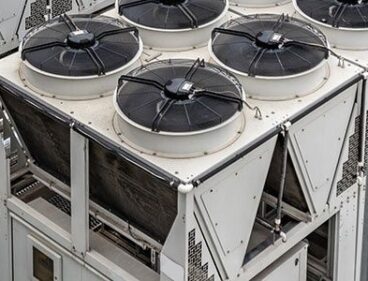
The Thermodynamic Dilemma of Modern Data Centers
AI clusters, high-performance computing, and accelerated analytics are pushing rack power densities beyond the assumptions built into many legacy cooling systems. As heat flux rises, conventional chilled-water and direct-expansion systems often require greater compressor lift, more pump energy, and larger mechanical plant capacity. The result is a difficult operational balance: a facility may reduce electrical consumption through evaporative assistance, yet increase water demand, treatment requirements, and exposure to regional scarcity restrictions. For operators evaluating industrial cooling solutions, the relevant question is therefore not whether water or electricity is preferable in isolation, but how both resources can be optimized together under changing weather and load conditions.
Indirect Adiabatic Free Cooling, or IAFC, offers a practical route through this dilemma. It cools the data hall air through a heat exchanger, keeping indoor air physically separate from outdoor air and its contaminants, while evaporation on the secondary side removes sensible heat. Unlike direct evaporative cooling, the process air can remain effectively dry, which supports tighter humidity control and avoids introducing untreated ambient air into critical spaces. The central engineering challenge is control. Power Usage Effectiveness and Water Usage Effectiveness must be managed as linked variables, with psychrometric conditions, IT load, utility tariffs, water quality, and equipment constraints incorporated into a single operating philosophy.
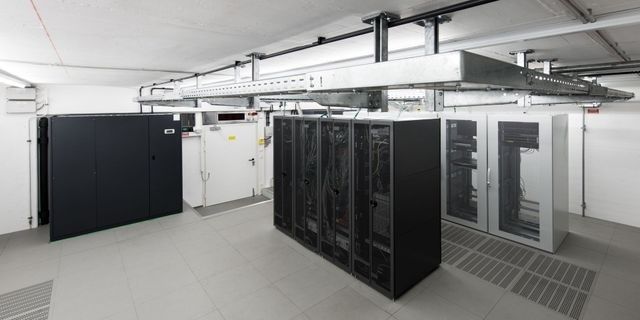
Core Mechanics of Indirect Evaporative Heat Exchange
IAFC depends on sensible heat transfer between two air streams. The primary stream serves the data hall or air-handling path, while a separate secondary stream rejects heat to the atmosphere. In dry mode, outdoor air passes across one side of an air-to-air heat exchanger and cools the primary stream without adding moisture. When dry-bulb conditions are not sufficiently favourable, water is applied to the secondary air path. Evaporation lowers the secondary airstream temperature, increasing the temperature difference available for heat transfer while preserving separation from the primary air.
Several exchanger arrangements can support this process. Plate heat exchangers provide a compact, predictable surface for cross-flow or counter-flow transfer. Heat-pipe systems use sealed tubes containing a working fluid to move heat passively from the warmer primary side to the cooler secondary side. A published experimental study of a regenerative indirect evaporative cooler using finned heat pipes and natural-fiber media reported heat-pipe heat absorption of up to 527.6 W and temperature reductions approaching 9.9 degrees Celsius under tested conditions. The same study recorded wet-bulb effectiveness as high as 85 percent and dew-point effectiveness of 65 percent, although results depended strongly on inlet temperature, air velocity, material properties, and ambient humidity. These results are best treated as performance references, not universal design guarantees. The underlying research is available in the heat-pipe evaporative cooling study.
Secondary scavenging airflow is a decisive boundary condition. If velocity is too low, the wet surface cannot reject the required heat and the exchanger approaches saturation without delivering useful capacity. If velocity is too high, fan power rises, contact time falls, and water distribution may become less effective. The control system should therefore coordinate fan speed, damper position, wetted-surface availability, and primary supply temperature rather than treating the secondary fan as a simple on-off device.
- Maintain clean heat-transfer surfaces because fouling increases thermal resistance and pressure drop.
- Verify uniform water distribution across pads, spray headers, or wetted channels to prevent dry zones and local scaling.
- Monitor primary and secondary pressure differentials to identify blocked filters, exchanger fouling, or abnormal airflow.
- Use variable-speed secondary fans where practical so heat rejection follows actual IT load and ambient conditions.
Determining Psychrometric Cut-Offs and Transition Thresholds
The transition from dry free cooling to adiabatic operation should be based on psychrometric opportunity, not a single dry-bulb temperature. Dry-bulb temperature indicates sensible cooling potential, but wet-bulb and dew-point temperatures reveal how much additional capacity evaporation can provide. A dry mode may remain effective on a cool, dry evening, while adiabatic assistance may be justified during a warmer period with sufficient wet-bulb depression. Conversely, high outdoor humidity can make water use ineffective even when the dry-bulb temperature appears attractive.
A robust sequence establishes operating bands with hysteresis. The system may operate in dry mode when the predicted supply-air temperature remains below its target with a defined safety margin. It can enter indirect adiabatic mode when the margin is lost and the calculated evaporative benefit exceeds the cost of water and fan energy. Mechanical trim cooling becomes appropriate when adiabatic operation cannot meet the target, when water quality or availability is restricted, or when the required secondary airflow would consume disproportionate power. Face-and-bypass dampers can assist with capacity modulation, but actuator travel and mixing behaviour must be considered carefully to avoid unstable temperature swings.
| Operating condition | Preferred mode | Primary control objective | Typical engineering concern |
|---|---|---|---|
| Low ambient dry-bulb with adequate sensible margin | Dry sensible free cooling | Minimize water and compressor energy | Filter and exchanger pressure drop |
| Moderate dry-bulb with meaningful wet-bulb depression | Indirect adiabatic cooling | Increase heat rejection with controlled water use | Scaling, drift, and water treatment |
| High ambient humidity or weak wet-bulb depression | Adiabatic assist with mechanical trim | Protect supply-temperature stability | Fan and pump energy may outweigh benefit |
| Extreme ambient conditions or restricted water availability | Mechanical cooling or load management | Maintain resilience and compliance | Compressor lift and available plant capacity |
Thresholds should be derived from measured performance curves rather than copied from generic manufacturer defaults. Commissioning teams should record supply-air temperature, return-air temperature, wet-bulb depression, fan speed, water flow, compressor power, and IT load across representative conditions. The resulting data can define a site-specific performance envelope. A transition should occur only when the expected capacity margin remains positive after accounting for sensor uncertainty, actuator response time, exchanger fouling, and the thermal inertia of the facility.
Dual-Resource Cost Modeling Across Operating Modes
The economic model should express every operating mode in comparable terms. A simplified real-time operating cost can be represented as the sum of electrical consumption and water-related expenditure:
Operating cost = electrical power multiplied by electricity tariff + make-up water volume multiplied by water tariff and treatment cost + discharge volume multiplied by disposal or sewer cost.
Electrical power includes supply and return fans, pumps, controls, cooling towers or wetted media, and mechanical compressors where trim cooling is active. Water cost must include more than the incoming municipal tariff. Treatment chemicals, filtration, monitoring, blowdown, water softening, wastewater charges, and possible scarcity surcharges can materially change the result. Cycles of concentration are especially important. Higher concentration reduces make-up water but increases dissolved-solids loading, which may accelerate scaling and require more aggressive blowdown or treatment.
The inflection point occurs when the incremental cost of extending adiabatic operation equals the avoided cost of mechanical cooling. If one additional unit of water reduces compressor energy by a measurable amount, the controller can compare the water and treatment cost of that unit with the electricity cost avoided. This calculation should use marginal values, not average annual values. Electricity tariffs may vary by time of day, while water restrictions can change seasonally or during drought declarations. A mode that is economically attractive overnight may be unsuitable during a peak tariff period if water is abundant, or during a scarcity period if water carries a substantial surcharge.
- Measure the incremental fan and pump power required for each increase in adiabatic capacity.
- Calculate water consumption from flow meters, expected evaporation, drift, and blowdown rather than relying only on design estimates.
- Apply current electricity, water, chemical, wastewater, and scarcity prices to each operating point.
- Compare the resulting cost with compressor power at the same supply-air temperature and IT load.
- Set a control threshold with a resilience margin so the system does not switch modes for small or uncertain economic differences.
A complete model should also assign a value to operational risk. Running close to a water-treatment limit can increase maintenance exposure, while operating compressors continuously can reduce redundancy and shorten service intervals. The optimal point is therefore not always the lowest instantaneous cost. It is the lowest lifecycle cost that preserves capacity, water quality, equipment reliability, and regulatory flexibility.
Automated Switchover Control and Sequence Logic
Reliable switchover begins with reliable measurement. Outdoor dry-bulb temperature, relative humidity, dew point, wet-bulb temperature, primary supply and return temperatures, secondary discharge temperature, water flow, conductivity, pressure differential, and fan status should be available to the supervisory control system. Wet-bulb values may be calculated from calibrated dry-bulb and humidity sensors, but the calculation becomes vulnerable to error when sensors drift or airflow conditions are poorly represented. Redundant or cross-checked sensors are justified where a faulty reading could trigger unnecessary water consumption or threaten supply-temperature stability.
Control loops should be coordinated rather than layered in conflict. Variable-speed fans establish available heat-rejection capacity, dampers regulate airflow paths, and face-and-bypass arrangements trim the delivered temperature. The supervisory controller should apply deadbands and minimum run times to prevent hunting. It should also consider rate of change. A sudden increase in wetting can produce a fast secondary-side temperature change, while the primary air path and building thermal mass respond more slowly. Sequencing should allow the exchanger to stabilize before additional mechanical capacity is enabled.
- Confirm sensor validity, water quality permissives, pump availability, and acceptable conductivity before enabling wet operation.
- Increase secondary fan speed to establish airflow and prove the required pressure differential.
- Open the water valve or start the circulation pump gradually, using a ramp rather than an immediate full-flow command.
- Hold mechanical trim at its existing level while the indirect adiabatic stage stabilizes.
- Reduce compressor capacity only after supply temperature and airflow remain within the control band for a defined time.
- Reverse the sequence during shutdown, removing water first, allowing surfaces to drain or dry as designed, and then reducing secondary airflow.
When water delivery is initiated, the control system should prevent a mechanical chiller from unloading at the same instant. That coordination avoids a capacity gap if evaporation underperforms or water flow fails to establish. Alarm logic should distinguish between a low-water condition, high conductivity, inadequate wetting, excessive pressure drop, and insufficient cooling effect. Each fault should have a defined fallback, typically dry free cooling where possible, mechanical trim where available, and a controlled load-protection response if both resources become constrained.
Mastering the Water and Energy Equation
IAFC performs best when treated as a dynamic resource-management system rather than a fixed cooling mode. Dry free cooling, indirect adiabatic assistance, and mechanical trim each have a place in the operating envelope. The correct choice changes with weather, IT load, energy price, water chemistry, equipment condition, and regulatory limits. A psychrometric control model, supported by measured equipment curves, allows the facility to select that mode deliberately while maintaining a stable supply-air temperature.
The engineering mandate is clear: instrument the system, establish site-specific transition thresholds, price both water and electricity at their marginal cost, and preserve conservative fallback capacity. Data-driven setpoint management turns unpredictable ambient conditions into a usable optimization variable. When combined with treatment planning, actuator maintenance, sensor calibration, and documented compliance procedures, this approach reduces lifecycle cost without compromising uptime. It also positions the facility to meet tightening water conservation requirements and carbon reduction targets while retaining the operational resilience expected of high-density computing environments.
Comments are closed.