
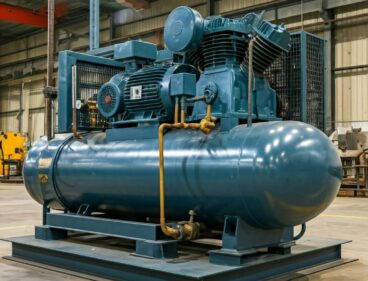
Why Inverter Retrofits Destabilize Mature Automation Networks
Retrofitting legacy chillers and heat pumps with variable-speed inverter compressors is an increasingly practical route to better seasonal efficiency, improved part-load performance, and reduced electrical demand. The compressor can modulate capacity more closely to the actual thermal load instead of cycling between fixed operating points. That benefit is especially valuable in plants with long periods of partial load, variable occupancy, or changing process conditions.
The difficulty appears when a fast inverter is connected to a mature automation network that was designed for slower supervisory duties. A drive and its onboard controller can react within milliseconds, while a shared RS-485 trunk may require substantially longer to deliver a request, receive a response, process a queue, and retry a failed packet. If the central controller calculates a correction from an outdated pressure or leaving-water-temperature value, the correction arrives after the physical system has already moved. The result is a feedback loop that continually corrects yesterday”s condition.
Typical symptoms include suction or discharge pressure oscillation, repeated compressor speed ramping, unstable leaving-water temperature, high motor and bearing stress, nuisance trips, and audible resonance as the compressor repeatedly accelerates and decelerates. These symptoms do not necessarily indicate a defective inverter compressor. In many cases, the root cause is a timing mismatch between mechanical dynamics and the communications architecture. A disciplined program of bus auditing, polling optimization, loop detuning, and edge delegation can stabilize the retrofit without a wholesale, multi-million-dollar BMS replacement.
The Physics of Hunting in Serial Fieldbus Environments
A control loop remains stable only when the controller has a sufficiently current view of the process and applies corrections at a suitable rate. On BACnet MS/TP, token passing determines when a device can transmit. On Modbus RTU, the master generally controls request sequencing, so every additional register, device, and retry adds to the response cycle. Baud rates from 9600 to 38400 bits per second can be adequate for supervisory monitoring, but they impose a finite communications budget. A long packet, multiple registers, or a busy trunk can make a supposedly fast control signal surprisingly old by the time it reaches the actuator.
Transport delay also includes more than raw bit time. It can include token circulation, device processing time, gateway conversion, queue management, inter-frame silence, error detection, and retransmission after a timeout. Poor termination, incorrect line biasing, excessive cable length, grounding problems, and duplicate addresses can create framing errors that make the effective delay even worse. A controller may appear to be polling normally while quietly discarding or repeating enough transactions to undermine the control loop.
When proportional or integral action operates on stale data, the controller may increase compressor speed because the measured temperature still appears too high. By the time that command is executed, the temperature may already be falling. The next poll then reports an over-corrected condition, causing the controller to reduce speed. This alternating response is hunting. The following comparison helps distinguish a healthy feedback path from a lag-distorted one.
| Control characteristic | Low-latency feedback | Lag-distorted serial feedback |
|---|---|---|
| Process value age | Closely reflects current operating conditions | May represent a previous operating state |
| Controller response | Correction follows measured change | Correction follows an earlier change |
| Integral action | Accumulates error at a predictable rate | Can accumulate while commands are still in transit |
| Compressor behavior | Small, controlled speed adjustments | Repeated ramps, reversals, and overshoot |
| Mechanical effect | Stable pressures and temperatures | Pressure pulsation, stress, and acoustic excitation |
The mathematical basis is familiar to controls engineers: transport delay adds phase lag, reducing the stability margin of a proportional-integral-derivative loop. A useful overview of PID behavior and its proportional, integral, and derivative terms is provided by this PID control reference. The practical implication is straightforward: as communications delay increases, loop aggressiveness must decrease unless the fast control function is moved closer to the equipment.
Field Diagnostics to Pinpoint Baud Bottlenecks and Polling Clashes
Commissioning should begin with evidence rather than tuning guesses. Record the actual trunk configuration, including baud rate, parity, stop bits, device addresses, cable type, shield termination, physical topology, termination resistors, and biasing arrangement. A star-shaped network, unapproved stubs, missing termination, or multiple bias sources can produce intermittent errors that resemble a control problem. Confirm that the drive, gateway, controller, and BMS agree on communication parameters before changing PID values.
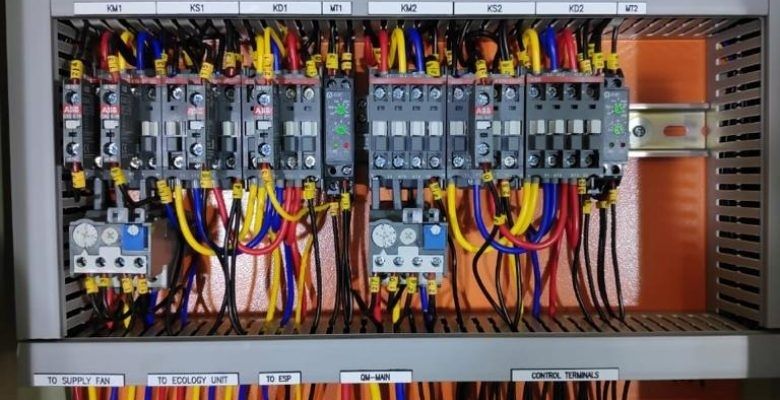
- Document the RS-485 trunk from end to end, including every device, junction, stub, termination point, and gateway.
- Check polarity, shield practice, reference conductors, line bias, and termination against the equipment manufacturers” instructions.
- Capture communication traffic with a suitable protocol analyzer or isolated serial interface.
- Measure request-to-response time, token circulation time, timeout frequency, retry counts, and failed frames during normal plant operation.
- List every polled object or register and classify it as critical control, protection, alarm, operator display, trend, or diagnostics.
- Repeat the measurements during peak traffic, startup, compressor modulation, alarm activity, and scheduled trend collection.
A USB-to-RS-485 interface can provide a practical diagnostic connection when it is electrically isolated and suitable for the network configuration. The interface itself does not solve a congested trunk, but it allows technicians to observe TX and RX activity, validate packet structure, and compare expected and actual turnaround times. Measurements should be taken at the same point in the network where the controller experiences the delay, because a laptop connected through a different gateway may not reveal queueing inside the BMS or plant controller.
Polling clashes are often hidden in plain sight. A non-critical trend may request dozens of registers at the same rate as a compressor pressure value. A graphics page can trigger additional reads whenever an operator opens it. Alarm acknowledgements, time synchronization, discovery traffic, and background diagnostics may then compete with the write command that controls compressor speed. Separate critical drive registers from background monitoring objects, reduce unnecessary reads, and use slower cadences for values that operators do not need every cycle. Establish a measured communications budget rather than assigning identical polling intervals to every point.
Retuning the Control Loop for Latency-Tolerant Regulation
Once the network behavior is known, retune the control loop around the real measurement and actuation delay. A derivative term is particularly vulnerable to batched telemetry. If several seconds of apparently unchanged data are followed by a new value, the calculated rate of change can appear artificially large. That derivative kick may produce an unnecessary speed command, especially when the BMS receives values in bursts rather than at a uniform interval.
For many retrofit applications, removing derivative gain is a sensible first stabilization step. Then reduce proportional gain and lengthen integral time gradually, allowing the thermal and refrigerant system to respond before another correction is accumulated. Integral anti-windup is essential when the compressor reaches a minimum or maximum speed, a pressure limit becomes active, or a safety interlock blocks the commanded output. A limiter enforces the permitted range; anti-windup prevents the integral term from continuing to build an error that will later cause overshoot.
- Disable or sharply limit derivative action when telemetry arrives in batches or at irregular intervals.
- Reduce proportional gain until pressure and temperature excursions are damped rather than amplified.
- Increase integral time so the controller does not accumulate error faster than the plant can respond.
- Apply anti-windup whenever speed, pressure, temperature, or safety limits constrain the output.
- Use adaptive deadbands to prevent needless speed changes around an acceptable operating point.
- Set acceleration and deceleration ramp limits inside the drive where possible.
- Move fast protection, minimum-speed logic, capacity limits, and local modulation into the drive DSP or an edge controller.
Deadbands and ramp-rate limits should be selected with care. An excessively wide deadband may allow unacceptable leaving-water-temperature drift, while an aggressive ramp limit may prevent the compressor from responding to a genuine load change. The correct values depend on compressor type, refrigerant circuit, evaporator volume, condenser conditions, and the thermal inertia of the connected system. Validate every change against manufacturer limits for oil return, minimum run time, discharge temperature, pressure ratio, and motor current.
The central BMS should remain responsible for supervisory objectives, sequencing, enable commands, setpoint resets, alarms, and operator visibility. It should not be asked to perform a millisecond-sensitive modulation function through a congested serial path. Local logic can maintain safe and stable operation when the network is delayed or temporarily unavailable, while the BMS supplies slower optimization signals and records performance for later analysis.
Bridging Legacy Serial Trunks to Modern Predictive Frameworks
Legacy infrastructure can support more capable control if the architecture is divided into appropriate layers. Where devices support it, change-of-value reporting reduces unnecessary polling by transmitting updates when a value changes beyond a defined threshold. COV reporting still requires sensible limits, reliability supervision, and fallback polling, but it can preserve bandwidth for critical transactions. It is also important to distinguish between a value that changes frequently and one that merely needs to be displayed frequently. A trend database may sample at a convenient interval without forcing the plant controller to read the same point at that interval.
- Use localized BACnet/IP gateways to isolate high-volume supervisory traffic from the most sensitive serial segment.
- Keep drive modulation and protection at the equipment or edge-controller level.
- Send only validated setpoints, enable states, limits, and calculated supervisory commands across the legacy trunk.
- Use event-driven reporting where supported, with scheduled polling as a communications-health fallback.
- Apply rate limits and hard safety bounds between predictive software and the BMS.
- Provide a manual or rule-based fallback sequence for loss of data, sensor drift, or model uncertainty.
Predictive control can further reduce the tendency to chase delayed feedback. Instead of waiting for leaving-water temperature to move and then reacting through a slow serial loop, a supervisory model can consider scheduled occupancy, outdoor conditions, historical load, process demand, and equipment status. It can issue a measured setpoint or capacity request ahead of an expected load shift, while the local controller handles the rapid response. This division separates prediction from protection and keeps communications delays outside the fastest loop.
Research on AI-driven predictive control for data-center HVAC systems describes a framework combining dense sensing, time-series forecasting, and reinforcement learning, with reported cooling-energy savings of approximately 15 to 25 percent in the modeled and limited field-test context. The results should not be transferred directly to every chiller plant, but the architectural lesson is relevant: predictive supervisory actions can replace high-frequency reactive cycling when they are bounded by safe fallback sequences. The source is discussed in AI-driven HVAC predictive control research.
Measure the outcome in operational terms. A stable retrofit should show fewer inverter thermal cycles, fewer speed reversals, steadier leaving-water temperature, reduced pressure fluctuation, and fewer alarms. Over time, reduced cycling can support longer bearing and motor life, although maintenance intervals must still follow the compressor manufacturer”s requirements. Trend the command, feedback, limits, alarms, and communications quality together so that a future performance decline can be distinguished from a sensor fault or network problem.
Achieving Long-Term Compressor Stability on Existing Infrastructure
Hunting is usually an architectural timing problem, not an inherent defect of inverter technology. A high-speed compressor exposes weaknesses that older fixed-speed equipment may have concealed because the mechanical system changed more slowly and the control sequence issued fewer meaningful corrections. The remedy is to align control bandwidth with the actual data path: tune out phase-lagged gains, assign sensible polling cadences, remove unnecessary traffic, and delegate fast decisions to the drive or an edge controller.
Before signing off a retrofit, verify stability under normal load, minimum load, startup, shutdown, setpoint changes, network interruption, alarm conditions, and transitions between lead and lag equipment. A practical commissioning checklist should include the following:
- Confirm correct RS-485 topology, termination, biasing, addressing, and communication parameters.
- Record measured latency, retries, packet errors, token circulation, and update intervals.
- Separate critical compressor points from graphics, trending, discovery, and diagnostic traffic.
- Validate proportional, integral, derivative, deadband, anti-windup, and ramp-rate settings against plant response.
- Prove that local safety and modulation functions continue to operate during BMS delay or loss of communications.
- Trend pressures, temperatures, speed commands, actual speed, current, alarms, and network health for an adequate operating period.
- Document normal operating ranges, fallback behavior, and the final polling schedule for service personnel.
With that discipline, existing serial infrastructure can remain useful rather than becoming an obstacle to modernization. The goal is not to make a legacy network behave like a high-speed motion bus. The goal is to place each control function at the speed where it belongs, preserve reliable supervisory coordination, and allow the inverter compressor to deliver its efficiency benefit without sacrificing mechanical stability or plant uptime.
Comments are closed.